
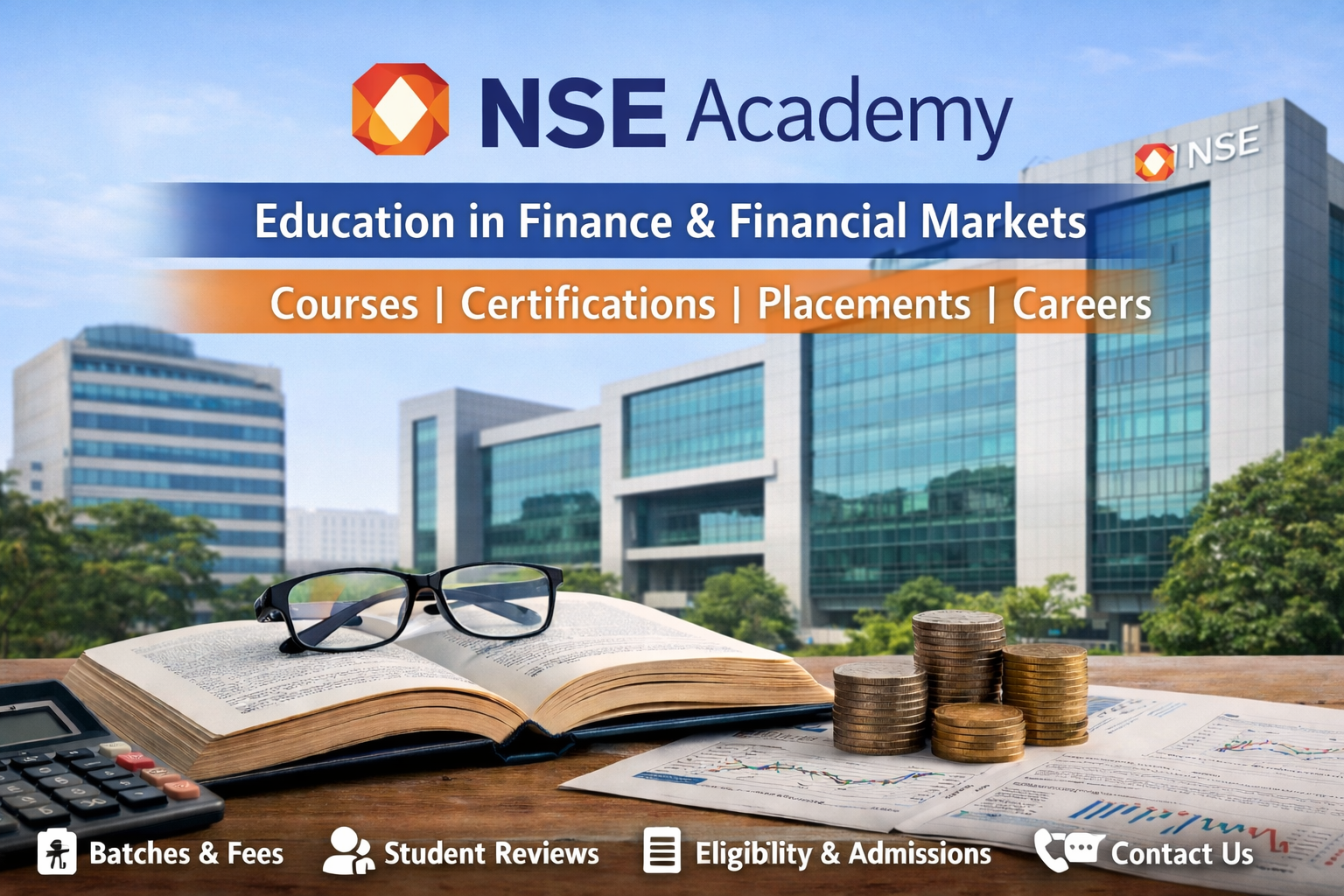
Overview of NSE Academy
NSE Academy is a leading institution in India dedicated to financial market education, professional certifications, and industry-aligned skill development. Established as a wholly owned subsidiary of the National Stock Exchange, the academy focuses on building a strong ecosystem of market-ready professionals equipped with practical knowledge, analytical capabilities, and regulatory awareness. Over the years, it has emerged as a trusted name among students, working professionals, and corporates seeking structured learning in capital markets, banking, finance, data analytics, fintech, and emerging financial technologies. The academy’s programs are designed to align closely with industry requirements, ensuring that learners gain relevant, application-oriented skills rather than purely theoretical understanding.
Background and Institutional Foundation
The foundation of NSE Academy was rooted in the vision of strengthening India’s financial markets by nurturing skilled human capital. As financial markets became more complex, technology-driven, and globally interconnected, the demand for trained professionals with a clear understanding of trading systems, risk management, compliance frameworks, and analytical tools grew rapidly. NSE Academy was established to bridge this gap by offering education that blends academic rigor with real-world market exposure. Drawing on the expertise, infrastructure, and credibility of the National Stock Exchange, the academy has built a strong reputation for delivering quality education across multiple levels of learners.
Mission and Educational Philosophy
The core mission of the academy is to empower individuals with industry-relevant financial knowledge and practical skills that enhance employability and professional competence. The educational philosophy emphasizes experiential learning, continuous upskilling, and alignment with market dynamics. Programs are structured to encourage critical thinking, data-driven decision-making, ethical market practices, and adaptability to regulatory changes. By focusing on both foundational concepts and advanced applications, the academy aims to prepare learners for long-term career growth in the financial services sector.
Program Portfolio and Course Categories
NSE Academy offers a diverse portfolio of programs catering to students, graduates, working professionals, and corporate teams. These include short-term certification courses, long-term diploma and postgraduate programs, executive education modules, and customized corporate training solutions. Course offerings span equity markets, derivatives, commodities, currency markets, mutual funds, investment advisory, research analysis, portfolio management, banking operations, financial modeling, risk management, compliance, fintech, blockchain, and data analytics.
Certification programs are among the most popular offerings, providing learners with focused knowledge in specific domains. Long-term programs are designed for individuals seeking in-depth understanding and career transition opportunities. These programs often combine classroom instruction, practical projects, assessments, and sometimes internships to provide comprehensive exposure. Postgraduate and diploma programs emphasize analytical skills, financial strategy, valuation techniques, and regulatory understanding, preparing learners for roles in research, analytics, advisory, and operations.
Batches and Learning Schedules
Batches at NSE Academy are structured to accommodate different learner profiles. Certification courses usually have multiple batches throughout the year, allowing flexibility in enrollment. Long-term programs typically follow structured academic calendars with fixed intake cycles, defined batch sizes, and scheduled assessments.
Online and hybrid learning models have become an integral part of the academy’s delivery approach. Virtual classrooms, recorded lectures, interactive sessions, and online assessments enable learners from across the country to participate without geographical constraints. This flexibility ensures that learners can balance education with professional or academic commitments while maintaining consistent engagement with course content.
Fee Structure and Cost Considerations
The fee structure at NSE Academy varies depending on the type, duration, and depth of the program. Short-term certification courses generally have relatively affordable fees, making them accessible to students and entry-level professionals. These fees typically cover instructional content, study materials, assessments, and certification issuance.
Long-term diploma and postgraduate programs involve higher investment due to their extended duration, comprehensive curriculum, and additional academic support. Fees for such programs may include classroom instruction, digital learning resources, project supervision, and evaluation. Advanced programs in areas such as data analytics, fintech, and quantitative finance may have premium pricing reflecting the specialized nature of the content and tools involved.
The academy may also offer flexible payment options, installment plans, or early enrollment benefits for select programs. This approach helps reduce financial barriers and encourages wider participation across different learner segments.
Faculty and Instructional Expertise
The faculty at NSE Academy comprises a blend of experienced academicians, market practitioners, industry consultants, and subject matter experts. This combination ensures that learners receive balanced instruction that integrates theoretical frameworks with practical insights. Faculty members often bring years of experience from trading desks, investment firms, banks, regulatory bodies, and financial technology companies.
Guest lectures and masterclasses by industry leaders further enrich the learning experience. These sessions provide exposure to current market trends, regulatory developments, and real-world challenges faced by professionals. Continuous curriculum updates and faculty training ensure that course content remains aligned with evolving market practices.
Industry Integration and Practical Exposure
One of the defining features of the academy’s programs is strong industry integration. Courses often incorporate live market data analysis, trading simulations, case studies based on real events, and project-based learning. This practical orientation helps learners develop problem-solving skills and gain confidence in applying concepts to real-world scenarios.
Industry partnerships and collaborations enable the academy to stay connected with employer expectations. These linkages support curriculum design, guest sessions, and in some cases, placement assistance for long-term programs. Learners benefit from exposure to industry tools, software platforms, and professional standards widely used in financial institutions.
Career Support and Placement Assistance
While outcomes vary by program type, the academy provides career support services for several long-term and advanced programs. These services may include resume development workshops, interview preparation sessions, career counseling, and industry networking opportunities.
Certification programs, while primarily focused on skill enhancement, also contribute to employability by strengthening professional profiles and meeting industry or regulatory expectations. Many learners use these certifications as stepping stones to enter the financial markets industry or progress to more specialized roles.
Learner Reviews and Market Perception
Reviews from students and professionals frequently highlight the academy’s structured curriculum, industry relevance, and credibility associated with the National Stock Exchange. Learners often appreciate the practical approach, clarity of instruction, and exposure to real market scenarios.
Constructive feedback sometimes points to the intensity of certain programs and the need for disciplined self-study to maximize outcomes. Overall perception within the industry remains positive, with many employers recognizing the academy’s programs as valuable credentials that demonstrate commitment to professional development and market knowledge.
Online Learning and Digital Infrastructure
The academy has invested significantly in digital infrastructure to support modern learning needs. Online platforms provide access to video lectures, reading materials, assessments, discussion forums, and performance tracking tools. Interactive features such as quizzes, assignments, and live doubt-clearing sessions enhance learner engagement and comprehension.
This digital ecosystem allows the academy to scale its offerings and reach a broader audience while maintaining instructional quality. It also supports continuous learning, enabling professionals to upgrade skills in response to market changes and technological advancements.
Corporate Training and Institutional Programs
In addition to individual learners, NSE Academy caters to corporate clients through customized training solutions.
Such programs support workforce upskilling, improve operational efficiency, and enhance overall organizational competence in financial markets. The academy’s ability to deliver tailored solutions strengthens its role as a strategic partner for institutions operating within the financial ecosystem.
Role in Financial Literacy and Skill Development
Beyond professional education, the academy contributes to broader financial literacy and skill development initiatives. By offering accessible certification programs and entry-level courses, it helps build foundational understanding of financial markets among students and aspiring professionals. These efforts support informed participation in markets and contribute to the overall development of India’s financial sector.
The academy’s focus on ethical practices, regulatory awareness, and risk management also reinforces responsible market participation. Through continuous education and upskilling, it plays a role in enhancing market integrity and professionalism.
Future Outlook and Growth Areas
As financial markets continue to evolve with technological innovation and regulatory reforms, the academy is expected to expand its offerings in areas such as artificial intelligence, quantitative finance, sustainable investing, and advanced fintech applications. Greater emphasis on data-driven decision-making and global market integration is likely to shape future curricula.
The academy’s strategic focus on adaptability, industry collaboration, and learner-centric design positions it well to address emerging skill gaps. By continuously updating programs and embracing digital delivery models, it aims to remain relevant in a rapidly changing financial landscape.
Table of Essential Contact Information
| Institute Name | Website | Gmail | Contact |
|---|---|---|---|
| NSE Academy | https://www.nseacademy.com/ | ncfm@nse.co.in | 022 68646464 |
Frequently Asked Questions (FAQs)
What types of learners can enroll in programs offered by the academy?
Programs are designed for students, graduates, working professionals, and corporate teams seeking financial market education and skill enhancement.
Are the certification courses suitable for beginners?
Yes, many certification courses are structured to build foundational knowledge and are suitable for individuals with limited prior exposure to financial markets.
Do long-term programs provide placement assistance?
Several long-term and advanced programs include career support and placement assistance, though outcomes depend on individual performance and market conditions.
Are online learning options available for all programs?
Many programs are available in online or hybrid formats, allowing learners to access content remotely while participating in interactive sessions.
Can working professionals manage course schedules alongside jobs?
Yes, flexible batch timings, weekend classes, and online options are designed to accommodate working professionals.
What value do these programs add to a professional career?
Programs enhance market knowledge, practical skills, and professional credibility, supporting career entry, progression, and specialization within financial markets.
How can corporates collaborate for customized training?
Corporate entities can engage with the academy’s corporate training team to design tailored programs aligned with organizational goals and regulatory needs.
