
Introduction
Preparing for competitive examinations in India requires discipline, strategy, and expert guidance. With increasing competition in entrance examinations such as CLAT, CUET, IPMAT, and other aptitude-based tests, aspirants actively seek coaching institutes that offer structured preparation, experienced faculty, and consistent performance tracking. One such institute that has gained attention among students is known for its focus on conceptual clarity, practice-driven learning, and exam-oriented strategies.
This detailed article explores all important aspects related to batches, fee structure, teaching methodology, student reviews, faculty profile, learning resources, admission process, and contact-related information. The content is designed to help students and parents make informed decisions while evaluating coaching options. The keyphrase has been used sparingly to maintain natural readability and balanced keyword density.
Institute Overview
The institute operates with the objective of helping students achieve strong results in competitive entrance examinations through systematic training and continuous evaluation. It caters to students from different academic backgrounds, including school students, college aspirants, and working professionals who wish to improve their aptitude and reasoning skills.
The academic ecosystem emphasizes consistency, conceptual strength, and exam temperament. Courses are designed after analyzing recent examination trends, difficulty levels, and changing patterns in national-level entrance tests.
Vision and Academic Philosophy
The institute’s vision revolves around empowering students with knowledge, confidence, and analytical ability. Rather than rote learning, the focus remains on understanding concepts, applying logic, and developing problem-solving efficiency. Regular assessments, feedback sessions, and mentoring are integrated into the learning process to ensure measurable improvement.
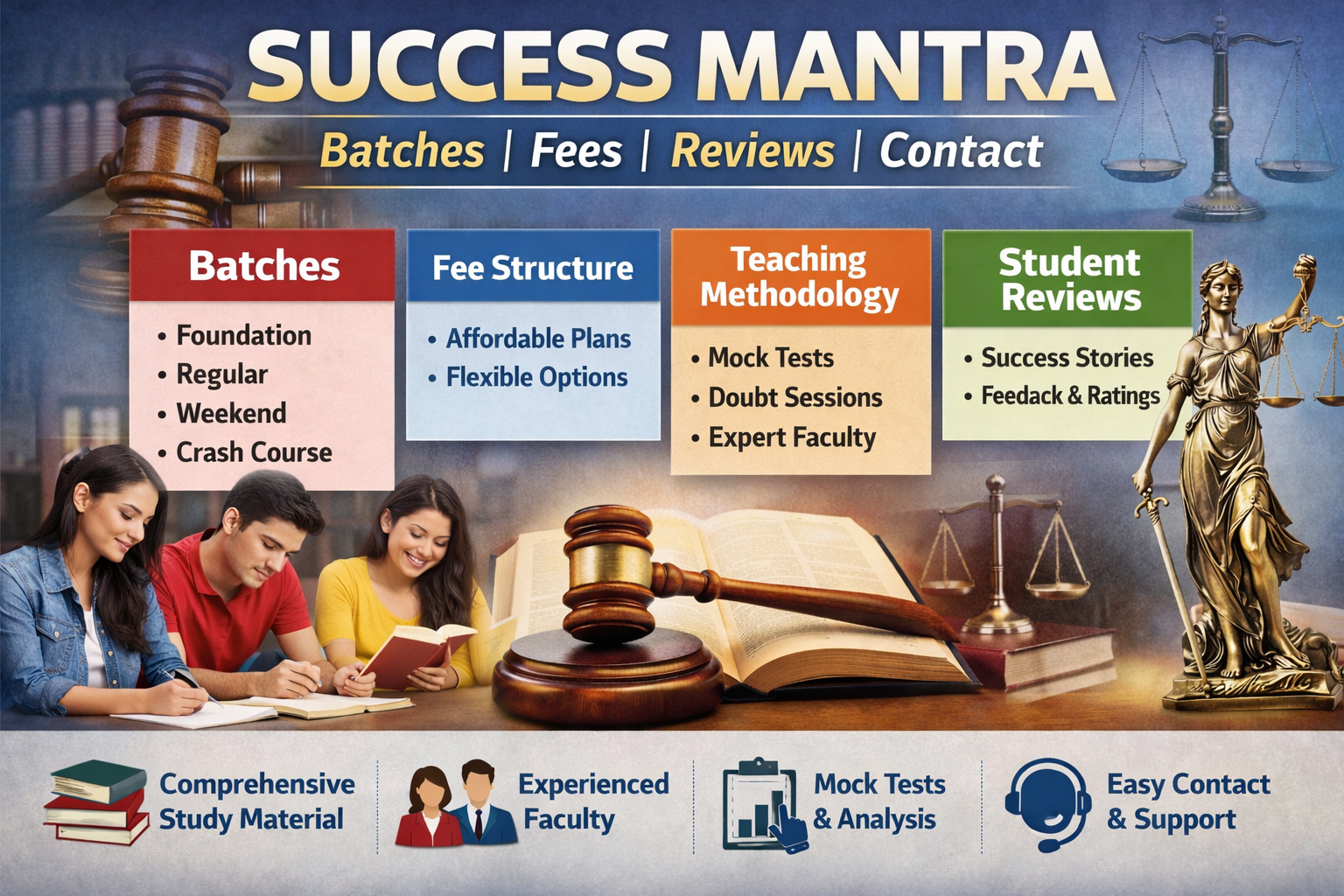
Courses and Batches Offered
A wide range of batches are available to suit students with different preparation timelines, academic commitments, and learning preferences. Each batch follows a structured syllabus plan aligned with the targeted examination.
Foundation Batches
Foundation batches are ideal for students who want to start early and gradually build strong fundamentals.
Target Group:
Students from Class 9, 10, and early Class 11.
Duration:
One year to two years, depending on the selected program.
Key Focus Areas:
- English language and vocabulary building
- Logical reasoning fundamentals
- Quantitative aptitude basics
- General awareness and current affairs
- Introductory legal and analytical reasoning
These batches emphasize concept-building and habit formation, making them suitable for long-term aspirants.
Regular Classroom Batches
Regular batches are designed for students preparing intensively for upcoming entrance examinations.
Target Group:
Class 11, Class 12 students, droppers, and graduates.
Duration:
Six months to one year.
Features:
- Daily or alternate-day classes
- Section-wise coverage of the syllabus
- Regular topic tests
- Classroom discussions and doubt-solving
These batches are structured to ensure syllabus completion well before the examination, leaving sufficient time for revision and practice.
Weekend Batches
Weekend batches cater to students who are unable to attend weekday classes due to school, college, or professional commitments.
Target Group:
School students and working aspirants.
Duration:
Six to twelve months.
Highlights:
- Classes conducted on Saturdays and Sundays
- Compact yet comprehensive sessions
- Extra focus on practice questions
- Recorded sessions for revision
Weekend programs provide flexibility without compromising the quality of preparation.
Crash Courses
Crash courses are short-term, high-intensity programs aimed at last-phase preparation.
Target Group:
Students who have already completed the syllabus and need focused revision.
Duration:
Four to eight weeks.
Key Components:
- Rapid revision of important topics
- Daily mock tests
- Exam strategy sessions
- Time management and accuracy improvement
These courses are especially useful for boosting confidence and refining exam strategies close to the test date.
Online and Hybrid Batches
To cater to students across different regions, online and hybrid learning options are also available.
Features:
- Live interactive online classes
- Recorded lectures for flexible revision
- Digital study material
- Online mock test platform
- Virtual doubt-clearing sessions
These programs combine convenience with structured academic support.
Fee Structure (Indicative)
The fee structure varies depending on the type of course, duration, and mode of delivery. Below is an approximate range to help students understand expected costs.
Foundation Programs
Indicative Fees:
INR 30,000 to INR 55,000 per year.
Includes classroom or online sessions, study material, and periodic assessments.
Regular Batches
Indicative Fees:
INR 45,000 to INR 70,000.
Covers full syllabus coaching, test series, revision modules, and faculty mentoring.
Weekend Batches
Indicative Fees:
INR 25,000 to INR 40,000.
Designed to be cost-effective while offering structured guidance.
Crash Courses
Indicative Fees:
INR 10,000 to INR 20,000.
Focused on revision, mock tests, and performance analysis.
Online Programs
Indicative Fees:
INR 15,000 to INR 50,000 depending on access duration and features.
Note: Fees may vary based on location, faculty involvement, and additional services such as personal mentoring.
Teaching Methodology
The teaching methodology follows a student-centric approach that balances theory, practice, and performance evaluation.
Conceptual Learning
Each topic is explained from the basics to advanced application levels. Emphasis is placed on understanding rather than memorization.
Practice-Oriented Sessions
Students receive extensive practice questions, worksheets, and assignments to strengthen problem-solving speed and accuracy.
Mock Tests and Analysis
Regular mock tests simulate real exam conditions. Detailed performance analysis helps identify weak areas and track progress over time.
Doubt Clearing Mechanism
Dedicated doubt sessions ensure students can clarify concepts without hesitation. Faculty members encourage interactive participation.
Mentorship and Guidance
Personalized mentoring sessions guide students on study planning, exam strategy, and stress management.
Faculty Profile
The faculty team consists of experienced educators and subject matter experts with a background in competitive exam training.
English and Verbal Ability Faculty
Experts in comprehension, grammar, and vocabulary building guide students in tackling language-intensive sections effectively.
Logical and Analytical Reasoning Faculty
Specialists focus on pattern recognition, analytical thinking, and structured problem-solving approaches.
Quantitative Aptitude Faculty
Mathematics experts emphasize shortcuts, accuracy, and conceptual clarity to handle numerical questions efficiently.
General Knowledge and Current Affairs Faculty
Trainers ensure students remain updated with national and international developments relevant to entrance examinations.
Study Material and Learning Resources
Quality study material is an essential component of effective preparation.
Printed Study Modules
Comprehensive books covering theory, examples, and practice questions are provided.
Practice Worksheets
Topic-wise worksheets help reinforce classroom learning.
Online Test Series
Students gain access to sectional tests, full-length mocks, and performance dashboards.
Revision Notes
Concise revision notes help students quickly recall important concepts before exams.
Student Reviews and Feedback
Feedback from students reflects varied experiences based on preparation style and consistency.
Positive Feedback
- Structured syllabus and planned coursework
- Supportive and approachable faculty
- Regular mock tests with detailed analysis
- Improvement in confidence and exam temperament
Constructive Feedback
- Some students prefer more personalized mentoring
- Pace of certain batches may feel fast for beginners
Overall, reviews suggest that consistent attendance and practice yield the best results.
Classroom Environment and Infrastructure
The learning environment is designed to support focused study.
Infrastructure
- Well-equipped classrooms
- Digital teaching aids
- Comfortable seating arrangements
Peer Learning
Interaction with fellow aspirants encourages discussion, competition, and collaborative learning.
Admission and Enrollment Process
The admission process is straightforward and student-friendly.
- Inquiry and counseling session
- Course selection based on academic goals
- Registration and documentation
- Fee payment through approved modes
- Orientation and commencement of classes
Scholarships or fee concessions may be available based on performance in scholarship tests.
Contact Details Table
| Institute Name | Website | Gmail | Contact |
|---|---|---|---|
| Success Mantra | https://www.successmantra.in/ | support@successmantra.in | 99530 66710 |
Frequently Asked Questions (FAQs)
Q1. Who should join foundation batches?
Foundation batches are suitable for students who want to start preparation early and build strong basics over time.
Q2. Are weekend batches effective for serious aspirants?
Yes, weekend batches are effective if students remain consistent and actively practice outside classroom hours.
Q3. What is included in the fee structure?
Fees generally include classes, study material, mock tests, and basic mentoring support.
Q4. Are online classes interactive?
Online classes usually include live sessions, real-time doubt solving, and recorded lectures for revision.
Q5. How often are mock tests conducted?
Mock tests are conducted regularly, with frequency increasing closer to the exam date.
Q6. Is personal mentoring available?
Some programs offer one-on-one mentoring depending on the course type.
Q7. Can students change batches after enrollment?
Batch changes may be allowed subject to availability and institute policy.
Q8. Are scholarships available?
Scholarships may be offered based on performance in internal tests or entrance assessments.
Q9. How important is regular attendance?
Regular attendance is crucial for syllabus completion, concept clarity, and continuous improvement.
Q10. Do crash courses guarantee selection?
Crash courses help improve performance but success ultimately depends on individual effort and consistency.
