
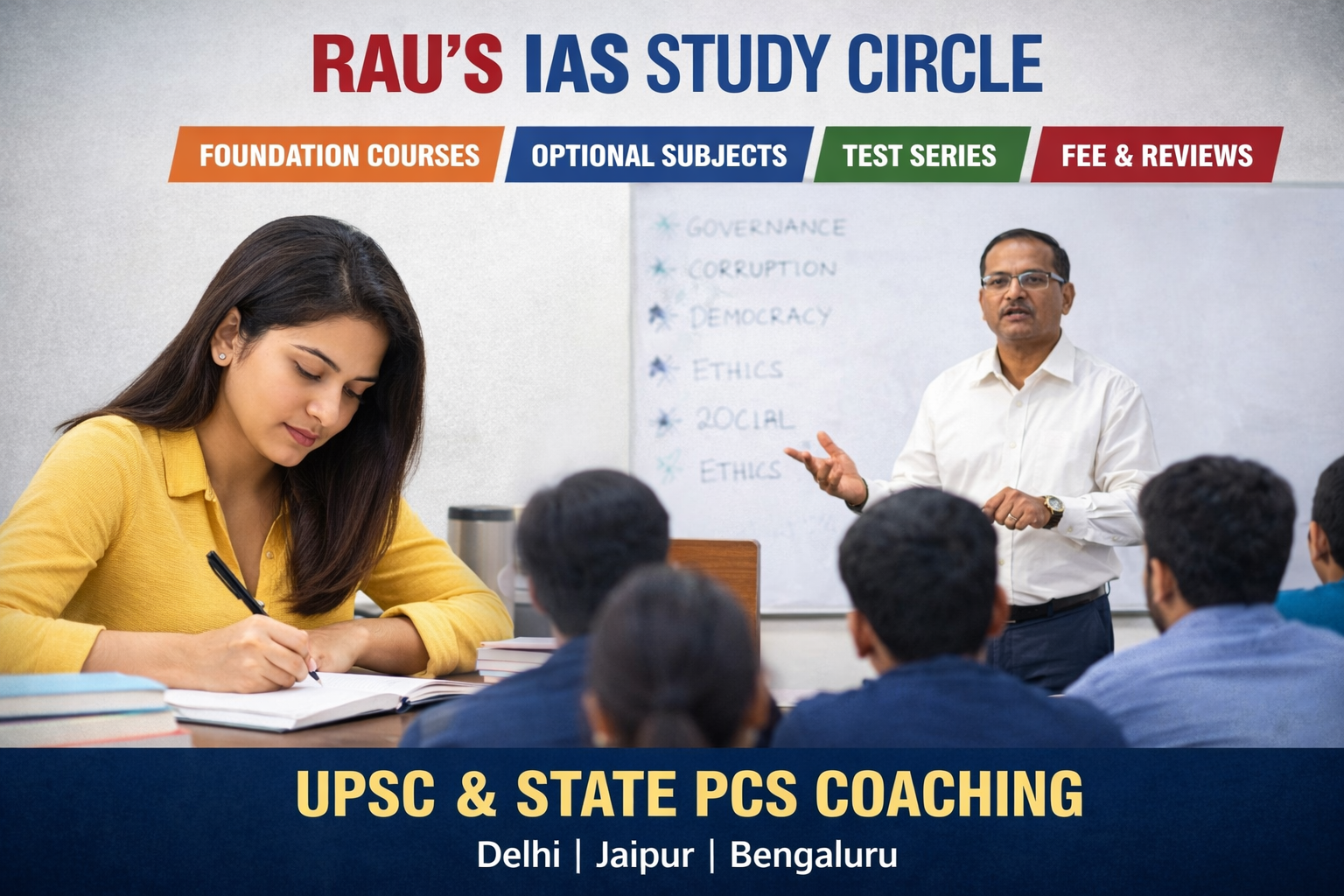
Rau’s IAS Study Circle is one of the long-standing coaching institutes for UPSC Civil Services Examination preparation in India, with a history dating back to 1953 and multiple branches across cities like New Delhi, Bengaluru, Jaipur and more. It aims to provide structured guidance for aspirants appearing for UPSC Prelims, Mains, CSAT, Optional Subjects and Interview Guidance Programmes. The institute is known for foundation courses, optional subject coaching, comprehensive study material, test series and strategic exam preparation modules that cater to students at different stages of their civil services journey.
Course Batches and Preparation Programs
Foundation and Integrated Courses
The general studies integrated foundation batch at the institute typically spans one year or more and includes coverage of Prelims and Mains syllabus, encompassing History, Polity, Economy, Geography, Environment, Science & Technology, Ethics & Integrity and Current Affairs.
Optional Subject Specialised Batches
Optional subjects are a major focus for mains preparation, and the institute provides optional subject batches that allow aspirants to prepare deeply for papers such as Public Administration, Political Science & International Relations (PSIR), Sociology, History, Geography and Economics.
CSAT and Prelims Focused Batches
For candidates specifically targeting Preliminary examination strategy, the coaching centre provides CSAT foundation batches to strengthen aptitude, reasoning, and problem-solving skills. These classes are typically shorter and concentrated on fast-track revision and frequent practice tests tailored to prelims pattern requirements.
Interview Guidance Programmes
After clearing the Preliminary and Mains examination, aspirants can opt for Interview Guidance Programmes that include mock interviews, personality development exercises, and personalized feedback sessions. These optional modules help candidates refine their communication skills and confidence ahead of the UPSC personality test.
Weekend and Extended Duration Batches
The institute also caters to working professionals or repeat aspirants through weekend batches and extended duration programmes that spread preparation over longer timeframes with flexible scheduling options.
Fee Structure Explained
The fee structure for civil services preparation varies depending on course type, location, and mode of delivery. Fees are often a critical factor for aspirants when choosing coaching for UPSC and related PCS exams.
Typical Fees (Approximate)
| Course Type | Duration | Fee (Approx) | Mode |
|---|---|---|---|
| General Studies Integrated (Offline) | 1 Yr | ₹175,000 | Classroom/Offline |
| General Studies Integrated (Online) | 1 Yr | ₹95,500 | Online |
| Optional Subject (Offline) | ₹55,500 | Classroom/Offline | |
| Optional Subject (Online) | ₹45,500 | Online | |
| CSAT Foundation (Offline) | ₹18,500 | Classroom/Offline | |
| CSAT Foundation (Online) | ₹12,500 | Online | |
| Interview Guidance | ₹500 (basic) | Offline/Online |
Fees for optional subjects and test series vary based on subject chosen and delivery format. Optional subjects often include extensive material and practice sessions for both papers in the mains exam.
Study Materials and Teaching Methods
The document sets include summaries, chapter-wise analysis, topic breakdowns, model answers and extensive current affairs integration.
In classroom batches, instructors emphasize interactive teaching, analysis of past year questions, group discussions, revision sessions and periodic tests. Online courses blend live lectures, digital PDFs, recorded sessions, and online test links to aid candidates who cannot attend in person.
Test Series and Evaluation
A critical part of UPSC preparation is regular testing and evaluation. The institute’s test series includes Prelims mock tests, mains full-length answer writing tests and optional subject test papers. Performance analysis sessions help aspirants identify strengths and weaknesses and adjust their preparation accordingly.
Faculty and Classroom Environment
Rau’s IAS Study Circle historically emphasised experienced faculty with strong subject knowledge and pedagogical skills. Faculty members typically include educators specialized in key areas such as Polity, Economy, History, Geography, Ethics, Public Administration and optional subjects. While student feedback highlights the dedication of some instructors and their ability to clarify complex topics, opinions on faculty consistency vary across campuses and batch formats.
Reviews and Student Feedback
Student reviews provide insight into the strengths and areas of concern regarding coaching quality, classroom experience, and overall satisfaction.
Positive Feedback
• Many students appreciate the comprehensive study material and structured syllabus coverage.
• Ratings from classroom experiences often highlight supportive faculty and regular feedback.
• A strong focus on current affairs integration and systematic teaching methodology is frequently mentioned positively.
Critical Feedback
• Some reports indicate that fees are high compared with classroom benefits.
• There are occasional concerns about administrative management and batch size.
• Online teaching modes have mixed feedback concerning engagement requirements.
Regulatory Notices
In the past, a regulatory authority imposed a penalty for misleading advertising related to course success claims, emphasizing transparency in how student results are communicated.
Tragic Incident
A basement flooding incident at one coaching centre location led to the tragic death of students due to safety failures, prompting regulatory attention and subsequent disciplinary actions regarding safety certification procedures.
Contact Details and Branch Information
Below is a table summarising institute names, official website, email contact, and phone details for major branches where available:
| Institute Name | Website | Contact | |
|---|---|---|---|
| RAU’S IAS STUDY CIRCLE | https://www.rauias.com/ | abhishekgupta@rauias.com | 011-4078 6050 |
Frequently Asked Questions (FAQs)
Q1. What types of batches are available?
A1. The institute offers foundation integrated batches, optional subject coaching, CSAT/prelims focused classes, interview guidance, weekend programmes, and both online and offline modes.
Q2. How much does the integrated UPSC course cost?
A2. Integrated foundation courses typically range around ₹95,500 for online and ₹175,000 for offline formats, depending on location and batch structure.
Q3. Is interview guidance included?
A3. Interview guidance is available, often as a separate add-on module for aspirants post mains exam preparation.
Q4. Are study materials provided?
A4. Yes, comprehensive printed and digital study materials covering syllabus topics and current affairs are part of the course.
Q5. What optional subjects are offered?
A5. Optional subjects include Public Administration, Sociology, History, Political Science, Geography, Economics, and others—availability may vary by branch.
Q7. Is the coaching worth the fees?
A7. Value depends on individual preparation goals, learning style, and location; student reviews range from highly positive to critical about cost vs. benefit.
