
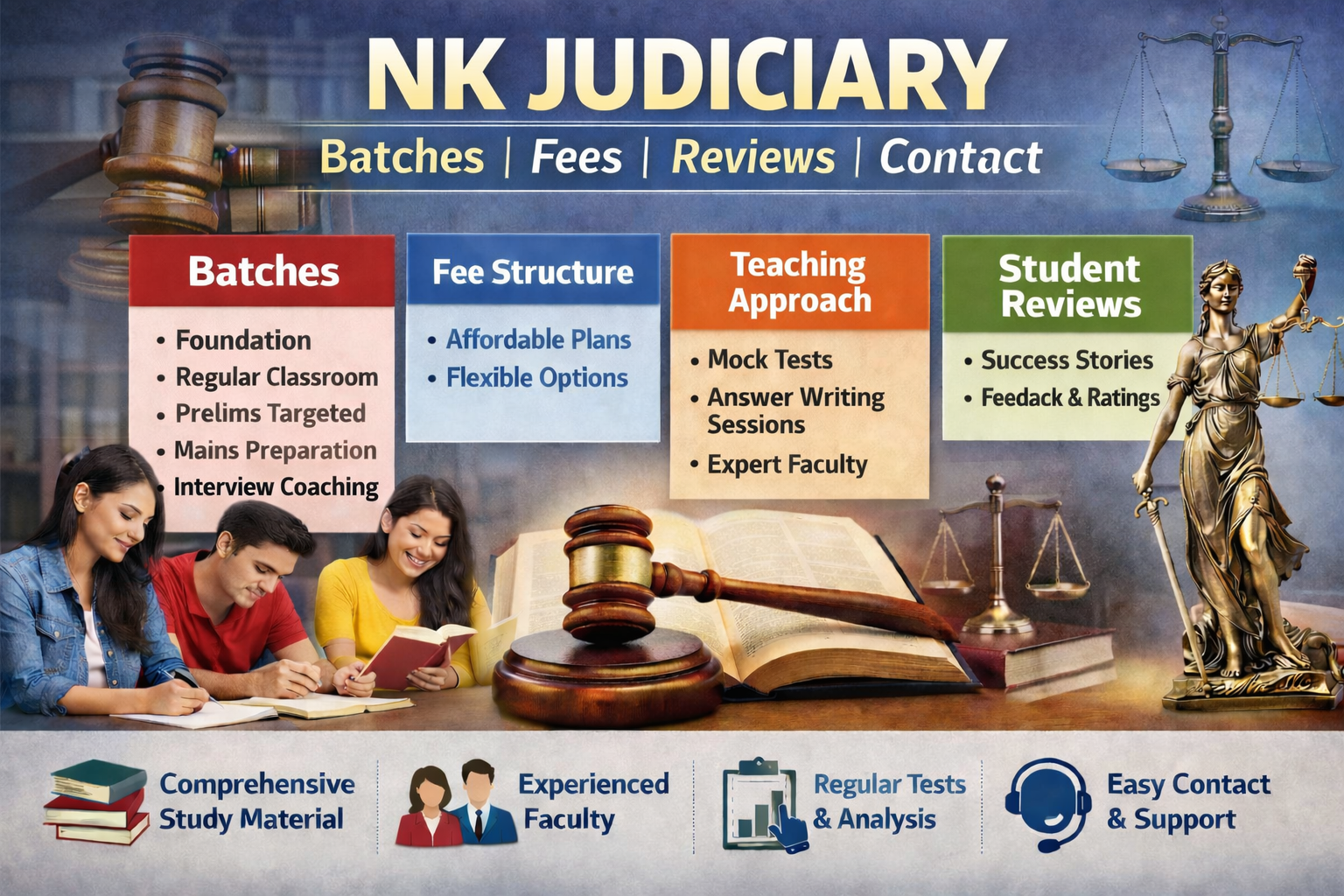
Introduction
Preparing for judicial services examinations and competitive law examinations demands rigorous study, strategic planning, analytical reasoning skills, and consistent practice across multiple law subjects. Thousands of aspirants across the country enroll in coaching academies that specialize in judicial exam preparation, Civil Judge tests, and related competitive law assessments. One such academic coaching platform focuses on delivering structured training, comprehensive curriculum coverage, and continuous evaluation to support aspirants on their journey. This training ecosystem emphasizes academic excellence, subject mastery, answer writing practice, and psychological readiness for written and interview stages.
In this comprehensive article, we will explore the teaching methodology, batch types, fee structure, performance tracking, study resource systems, feedback from past students, and how the support system shapes competitive preparation outcomes. The discussion spans from foundational batches to advanced interview coaching, providing aspirants and parents with a complete insight into judicial training pathways offered by prominent coaching academies.
Overview of Judicial Services Examination Preparation
Judicial services examinations serve as gateways to careers as Civil Judges, Magistrates, or members of the subordinate judiciary. These highly competitive exams are conducted by state public service commissions or high court selection boards. The selection process typically comprises three stages: preliminary objective tests, a descriptive mains examination, and a personal interview or viva voce.
Successful preparation requires strategic syllabus analysis, extensive practice of objective and descriptive questions, advanced knowledge of procedural and substantive law, and a disciplined study routine. Coaching institutions specializing in judiciary and competitive law facilitate these preparation needs by offering structured lesson plans, sectional tests, simulated exams, and personalized feedback systems.
Batches and Course Structure
Foundation Judicial Batches
Foundation batches offer aspirants a step-by-step introduction into legal subjects essential for competitive exams. These sessions are ideal for early starters who want to build strong conceptual foundations before the rigorous phases of focused test preparation.
Target Group
- Law students in intermediate years
- Graduates planning long-term preparation
- Beginners needing foundational support
Duration
12 to 18 months.
Core Features
- Extensive focus on Constitutional Law
- Introduction to Civil and Criminal Procedure Codes
- Overview of substantive law subjects
- Concept clarity sessions and group discussions
- Topic-wise practice assessments
Foundation batches help aspirants navigate the legal syllabus confidently and build analytical reasoning skills essential for deeper legal application in exams. NK Judiciary
Regular Classroom Batches
Regular classroom batches are designed for disciplined aspirants aiming to complete their preparation within a defined timeframe. These programs emphasize scheduled learning and continuous assessment.
Audience
- Dedicated full-time aspirants
- Graduates preparing for upcoming judicial exams
Duration
8 to 12 months.
Focus Areas
- Comprehensive coverage of procedural law
- Intensive practice for objective and descriptive components
- Weekly sectional tests and discussions
- Full-length mock examinations
Regular sessions integrate academic coaching with strategy workshops, enabling learners to adapt to evolving question trends and exam dynamics.
Prelims Targeted Batches
Some coaching platforms offer exclusive batches dedicated to preliminary examination preparation. These interactive lectures and practice sessions emphasize efficient test-solving methods for the screening stage.
Target Audience
- Aspirants focusing on prelims strategy
- Repeat candidates seeking targeted revision
Duration
3 to 5 months.
Key Components
- Objective question formats
- Time-bound practice sets
- Question interpretation techniques
- Mock tests with detailed reviews
Preliminary-focused modules accentuate speed, analytical accuracy, and elimination strategies to improve chances of qualifying for the mains examination.
Mains Preparation Batches
The mains examination requires disciplined answer writing, systematic legal reasoning, and thorough understanding of substantive law. These batches cater specifically to descriptive writing skill development.
Candidates
- Prelims-qualified aspirants
- Learners refining descriptive approach
Duration
4 to 6 months.
Study Focus
- Structured answer writing practice
- Evaluation by senior law educators
- Familiarity with legal standards and citation patterns
- Case law integration and contextual writing skills
Mains batches prioritize organization of thought, legal drafting ability, and presentation skills necessary for high scoring in judiciary descriptive papers.
Interview and Personality Development Programs
A formal interview or viva voce assesses legal awareness, communication skills, judicial temperament, and professional poise. Specialized interview coaching is offered to equip candidates for this final and critical stage.
Focus
- Mock interview rounds
- Panel-style evaluations
- Current legal and social issues analysis
- Stress handling and confidence building
These sessions bridge the gap between academic preparation and real-world judicial communication expectations. NK Judiciary
Fee Structure (Indicative)
The coaching fees vary based on batch intensity, academic services included, and additional resource access options.
Foundation Batch Fees
Approximate range: INR 60,000 to INR 1,20,000.
Regular Classroom Batch Fees
Approximate range: INR 80,000 to INR 1,50,000.
Prelims Targeted Batch Fees
Approximate range: INR 25,000 to INR 45,000.
Mains Preparation Batch Fees
Approximate range: INR 30,000 to INR 60,000.
Interview Coaching Fees
Approximate range: INR 15,000 to INR 30,000.
Fees often include classroom lectures, printed study materials, test series access, performance analytics, and evaluation reports.
Teaching Methodology and Academic Strategy
Educational excellence in judiciary coaching depends on a balanced mix of theory teaching, practical exercises, legal discussions, and performance evaluation. Institutes that specialize in law exam training often follow a multi-layered approach:
Conceptual Clarity Lectures
Most legal subjects require a solid grasp of statutory provisions, case law, and jurisprudential foundations. Faculty members emphasize law concepts, legal interpretations, and systematic exposition of statutory frameworks.
Integrated Testing Mechanism
Periodic sectional tests help students monitor progress, evaluate concept understanding, and identify weak sections that need reinforcement. These tests provide immediate feedback and enable targeted study efforts.
Full-Length Mock Examinations
Simulated test environments build time management skills, reduce exam anxiety, and prepare aspirants for real examination conditions. Analysis of mock exam performance is critical in refining revision plans.
Answer Writing and Descriptive Practice
Answer writing sessions focus on structure, content, clarity, and legal argumentation. Exercises emphasize legal drafting skills, accurate citation of law, and articulation of logical reasoning in descriptive papers.
Strategic Review Sessions
Regular performance reviews help aspirants understand error patterns and refine exam strategy. Faculty-led analysis sessions also assist in recalibrating preparation cycles and time distribution. NK Judiciary
Faculty Profile and Instructional Expertise
Experienced educators and legal practitioners are pivotal in guiding competitive law aspirants. Faculty members typically bring academic knowledge, courtroom insights, and test-specific teaching skills.
Language and Legal Communication Experts
Clarity in language, precision in expression, and structured argumentation are vital. Faculty trained in legal communication help candidates develop concise writing style and analytical clarity.
Law Subject Specialists
Subject specialists in civil law, criminal law, constitutional law, and procedural statutes offer detailed teaching tailored to competitive exam needs. Their expertise enables aspirants to handle complex legal arguments and hypothetical question formats.
Mentors for Performance Support
Mentors play a crucial role in motivating students, addressing study challenges, and helping maintain consistency. One-on-one guidance provides personalized study advice and emotional support throughout the preparation phase.
Study Materials and Learning Resources
Quality study resources are indispensable for competitive exam success. Coaching institutes prioritize the development of comprehensive materials aligned with examination syllabus standards.
Printed and Digital Study Notes
Students receive systematically curated notes covering critical law concepts, statutory interpretations, and landmark judgments. Most resources include examples, summaries, and practical applications.
Case Law Compendiums
Latest case law compilations help aspirants stay updated with relevant judicial pronouncements. Integrating evolving case law into written answers enhances the quality of responses.
Practice Papers and Revision Sheets
Regular practice sets reinforce learning, improve retention, and train analytical reasoning. Revision sheets highlight high-frequency topics and essential points for quick recall.
Online Test Platforms
Digital test portals facilitate accessible practice, performance tracking, and interactive feedback. These platforms also compare student performance with wider test groups. NK Judiciary
Academic Environment and Student Support
A disciplined academic environment enhances preparation quality. Coaching centers often provide structured facilities that ensure focus, peer learning, and study culture enhancement.
Classroom Infrastructure
Well-equipped classrooms with audio-visual teaching aids, comfortable seating, and organized schedules help maintain attention and promote intellectual discourse.
Study Hubs and Discussion Rooms
Collaborative spaces promote group discussions, peer learning sessions, and conceptual exchange. These zones encourage active participation and knowledge depth.
Administrative and Academic Coordination
Efficient administrative support helps clarify schedules, manage test logistics, and provide timely resource distribution. NK Judiciary
Student Reviews and Feedback
Analyzing student experiences sheds light on strengths and weaknesses of coaching programs. Reviews often reflect the academic quality, resource relevance, and exam readiness outcomes achieved by aspirants.
Positive Feedback Themes
- Structured syllabus delivery and topic organization
- Frequent testing and performance evaluation
- Faculty accessibility and doubt resolution support
- Practical classroom discussions and case analysis
Constructive Feedback Themes
- Batch sizes affecting one-on-one attention
- Variation in teaching styles for some subjects
- Demand for more personalized mentorship
Overall, feedback suggests that aspirants who maintain disciplined study routines and regular practice tend to benefit significantly.
Admission and Enrollment Process
The admission process typically includes the following steps:
- Initial counseling session to understand preparation goals
- Selection of suitable batch type based on preparation level
- Registration with required academic details
- Fee submission through prescribed payment channels
- Orientation session outlining study plans and resource access
- Commencement of instructional modules
Students may also receive schedules for test series, classroom timings, and evaluation sessions to facilitate structured preparation. NK Judiciary
Contact Details Table
| Institute Name | Website | Gmail | Contact |
|---|---|---|---|
| NK Judiciary | https://www.nkjudiciary.com/ | nkjudicials@gmail.com | 99684 91585 |
Frequently Asked Questions (FAQs)
Q1. Who should consider judicial services coaching early?
A1. Law students in intermediate years or recent graduates seeking comprehensive preparation should consider early enrollment in foundational batches to build strong conceptual depth.
Q2. How are preliminary and mains coaching integrated?
A2. Integrated preparation helps candidates retain concepts, practice objective questions, and simultaneously refine descriptive skills without compartmentalizing the stages.
Q3. How important are mock tests for competitive law exams?
A3. Mock tests are crucial as they provide real exam simulation, help assess time management, and enable performance benchmarking against peers.
Q4. Does coaching include case law updates?
A4. Yes, updated case law compilations help aspirants integrate recent judicial developments into answers and enhance analytical rigor.
Q5. How often is answer writing evaluated?
A5. Descriptive practice sessions often include weekly or bi-weekly evaluations with feedback to strengthen writing and argumentation skills.
Q6. Is interview guidance provided separately?
A6. Many coaching programs offer dedicated interview sessions to prepare aspirants for final selection stages.
Q7. Are study materials aligned with latest exam patterns?
A7. Quality coaching institutes update study resources regularly based on recent examination trends and syllabus changes.
Q8. Can working professionals prepare through coaching?
A8. Yes, structured planning, time management, and flexible batch options allow working aspirants to prepare effectively.
Q9. How long does judicial exam preparation typically take?
A9. Preparation time varies, but on average candidates require 1 to 2 years of focused study to cover substantive laws, procedural subjects, and answer writing skills.
Q10. What role does personalized mentorship play in coaching outcomes?
A10. Personalized mentorship enhances individual performance by addressing weak areas, advising on study plans, and sustaining motivation throughout preparation.
